UNICEF: Risks Children and Women are Far from Over

The United Nations Children's Fund Nations Programme headquartered in New York City that provides long term humanitarian and developmental assistance to children and mothers in developing countries. With the recent military intervention to recover control of Mali’s vast desert north, the humanitarian situation, exacerbated by insecurity, has become even more serious for the most susceptible populations children and women.


To give an inside look at what it takes to react to a complex emergency on the ground, UNICEF has published a special report, Supporting Women and Children through an Emergency. The report archives the scale-up of UNICEF operations in Mali, a country already struggling from poverty, inadequate education and a weakened health system. Building on gains and results over the past year, UNICEF is suspended to respond to the new risks that Mali’s children and women face.

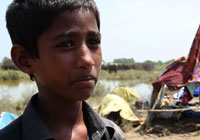
UNICEF: Offering Humanitarian Support to Pakistan

For 2013, United Nations Children Fund has planned to continue supporting humanitarian support in Pakistan in coordination with the government, other UN agencies and non-governmental organizations in order to respond to the needs of the millions of children and women affected by lack of confidence and floods. 


According to UNICEF’s Humanitarian Action for Children, 2013, the organization will deliver an integrated package of maternal, newborn and child health and nutrition services at the community level.

All through the current year, UNICEF is to provide water, sanitation and hygiene services to 1.5 million people in the affected areas, to make sure the supply of lifesaving drinking water and reduce the risk of water-related diseases throughout hygiene promotion.

In addition, as Pakistan is prone to recurrent natural disasters, emergency preparedness activities and response in 2013 will be of supreme importance, and must include efforts to strengthen pliability though national capacity development and attentiveness.

The International Day of the Girl Child: UNICEF focuses on ending child marriage


UNICEF and associates are highlighting joint efforts to end child marriage - a fundamental human rights violation that impacts all aspects of a girl's life on the first International Day of the Girl Child. According to Anju Malhotra with the gender and rights section in UNICEF the UN and partners are coming together to show the incredible progress made and to emphasize the ongoing challenges.


The release confirmed that UNICEF supported the passage of the Child Marriage Prohibition Act of 2006, and has since supported the development and completion of a national plan on child marriage ceremony that aims to coordinate programmers and policies to speak to both the causes and the consequences of child marriage.

Education is one of the most effectual strategies to protect children against marriage. When girls are able to stay in school an attitudinal change can also occur towards their opportunities within the community.

Nigeria Outpatient services save the life of severely scrawny children


The first rains have arrived in northern Nigeria. Tufts of guinea corn are peeking out from the soil. Farmers are optimistic that this year’s growing season will yield good results – yet hundreds of children are packed into a community clinic near Katsina, seeking treatment for severe acute malnutrition.“It’s not that they’re hungry,” said Rabia Mohammed, chief government nutritionist for Katsina State. “It’s just that they’re eating the wrong kind of food.”

The staple diet here is guinea corn, maize meal and rice. All are rich in carbohydrates, but, on their own, they are not sufficient to ensure that children get the range of nutrients they need.As a result, thousands of children are now attending outpatient therapeutic centres for treatment. These centres are part of an integrated health strategy that UNICEF is supporting called Community Management of Acute Malnutrition (CMAM). 

The children wait under a tree, the clinic’s waiting area. All exhibit the classic symptoms of acute malnutrition: Some have swollen limbs, a tell-tale sign of protein deficiency; others have chronic diarrhoea and vomiting. But their rehabilitation is taking place in the community, rather than in hospital. Here, the children are regularly weighed, offered medications and fed supplementary foods. Their mothers are taught about nutrition and hygiene. Any childhood immunizations they may have missed are also administered on the same site.

 According to Ibrahim Lawal Dankaba, the local government representative, with 20 per cent of the population under the age of 5, these kinds of integrated strategies are critical.

UNICEF public service statement urges focus on HIV anticipation

On 22 July, experts will gather in Washington, D.C.,for the International AIDS Society’s biennial conference on rolling back the HIV and AIDS epidemic. UNICEF will host a leadership forum stressing the need for innovation in eliminating new HIV infections in children. This story is part of a series illustrating UNICEF's efforts on behalf of children and women affected by HIV.


As a sponsor of these awards, UNICEF Uganda created a 30-second public service announcement about HIV prevention – a key priority for the organization. Every day about 1,000 children are newly infected with HIV. Most of them are born in sub-Saharan Africa,” says the animated announcement.

UNICEF HIV and AIDS Chief Craig McClure will also lead a UNICEF delegation to the conference, with staff members emphasizing the need for coordinated action to bring new infections down to zero. The public service announcement will be broadcast on CNN International throughout the month of July, in the lead-up to the actual awards ceremony, which will be held on Saturday, 21 July 2012 in Lusaka, Zambia.

A road map to child survival: Reduce the Rate of child death


The world cannot persist with business as usual when every year nearly 11 children die before their fifth birthday from easily preventable and readily treatable causes – almost 90 percent of these deaths occur in 42 countries of South Asia and Sub Saharan Africa. According to Amie Batson, USAID Deputy Assistant Administrator for Global Health, this road map is taking in the accumulated wisdom across our community.
A National Conference on Child Survival, involving experts, official’s donors and NGOS from different parts of the world, will be held in New Delhi on November 29-30 to draw up a roadmap for child survival over the next ten years.

In the past last 40 years, thanks to new vaccines and improved health care practices, child deaths have been reduced by more than 50 per cent. UNICEF Executive Director Anthony Lake speaks on the first day of the international forum Child Survival Call to Action, in Washington, D.C., USA.

Yet millions of children still die every year from preventable causes, mostly in sub-Saharan Africa and south Asia. Child Survival Call to Action challenges the world to make specific plans to reduce child mortality to below 20 child deaths per 1,000 live births in every country by 2035

Kids dies every six minutes in Somalia food shortage

A kid is dying from malnourishment every six minutes in drought hit Somalia, stunned aid workers revealed. UNICEF plans a huge relief mission to the two regions of Somalia where a state of famine was declared this week.


According to UNICEF UK executive director David Bull We have stepped up our response even more as the death rate has climbed dramatically. 

UNICEF estimates it needs £62.8million over the next six months in order to reach malnourished children. It means that around 250 underfed youngsters under five die each day, according to United Nations aid agency UNICEF.